Feathered serpents carved from jade have survived five centuries buried under Mexico City, and yet they still generate more curiosity than most contemporary art. That single fact explains why the phrase "Aztec treasures" pulls in three very different crowds at once: history enthusiasts hunting for verified artifacts, casino players chasing a themed slot title, and puzzle fans looking for a physical or digital treasure hunt experience. These three interests rarely overlap in any other context, yet they collide constantly around Aztec mythology and its supposed riches.
This overlap creates confusion. A quick search for Aztec treasures returns museum catalogs, gambling platforms, and escape-room advertisements in the same results page, with little distinction between them. Anyone trying to write a serious Aztec review has to untangle these threads first - separating documented history from entertainment products that borrow its imagery. For readers specifically interested in the gaming angle, a detailed treasures of aztec review breaks down mechanics, volatility, and theme accuracy without conflating them with archaeological fact.
What follows is an attempt to give each of these three subjects its due: the real artifacts recovered from Aztec civilization, the "Treasures of the Aztecs" game and what it actually offers players, and the various treasure hunt formats - physical, educational, and digital - that use Aztec lore as their backbone. Each deserves separate scrutiny, because conflating them does a disservice to all three.
Understanding the Aztec Legacy Behind the Hype
Before evaluating any product or experience branded with Aztec imagery, it helps to understand why this civilization generates so much fascination in the first place. The Aztec Empire, centered in the Valley of Mexico between the 14th and 16th centuries, built one of the most sophisticated urban and economic systems in the pre-Columbian Americas. Tenochtitlan, its capital, rivaled European cities in population and exceeded most in planning. This historical weight is exactly why marketers reach for Aztec symbolism when they want to suggest mystery, wealth, and danger.
Why Aztec Culture Captivates Modern Audiences
The appeal isn't accidental. Aztec cosmology combined violence, artistry, and astronomy in ways that feel exotic to modern audiences raised on simpler mythological frameworks. Sacrificial rituals, sun worship, and a calendar system accurate enough to track solar cycles create a civilization that reads as both advanced and alien. That tension between sophistication and brutality makes for compelling branding, whether the product is a documentary or a slot machine.
The Historical Roots of "Aztec Gold" Legends
Much of the popular obsession with Aztec riches traces back to Spanish conquest narratives. Hernán Cortés and his men described vast quantities of gold, and subsequent legends - including the so-called "Aztec gold curse" - grew from genuine historical events distorted by centuries of retelling. Most of the gold described by conquistadors was melted down and shipped to Spain, meaning the treasures that inspire today's games and hunts are largely symbolic rather than literal.
How Mythology Shapes Product Branding Today
Game developers, museum curators, and treasure hunt designers all draw from the same well of imagery: serpents, pyramids, sun gods, and gold. Understanding this shared visual vocabulary makes it easier to judge whether a specific product treats the culture with any accuracy or simply borrows its aesthetics for shock value.
Aztec Artifacts Review: What Real Treasures Have Been Discovered
Genuine Aztec artifacts occupy museum collections worldwide, and an honest Aztec artifacts review has to separate documented finds from speculative or fabricated claims that circulate online.
Notable Archaeological Finds
The Templo Mayor excavation in downtown Mexico City remains the most significant Aztec archaeological site, yielding thousands of offerings including obsidian knives, jade masks, and ceremonial vessels. The Aztec calendar stone, now housed in the National Museum of Anthropology, stands as one of the most recognized single artifacts from the civilization. Turquoise mosaic masks, feathered shields, and codices - pictorial manuscripts recording history and ritual - round out the major categories of surviving material culture.
Materials and Craftsmanship
Aztec artisans worked primarily with materials available in Mesoamerica: jade, turquoise, obsidian, gold, and feathers from tropical birds. Gold was valued less for scarcity than for its association with the sun god and was often worked into thin sheets or intricate figurines rather than hoarded as bullion, which contradicts the "piles of gold" imagery common in popular culture.
Museums and Collections Worth Visiting
- The National Museum of Anthropology in Mexico City - the largest single collection of Aztec artifacts
- The Templo Mayor Museum, built directly on the excavation site
- The British Museum's Mesoamerica collection, including the famous turquoise mosaic serpent
- The Museum of the Americas in Madrid, holding items taken during the colonial period
Separating Fact From Fiction in Online Claims
Countless websites claim to sell or display "authentic Aztec treasures" with no verifiable provenance. Legitimate artifacts are almost always in institutional hands, tracked through documented excavation records. Any private seller claiming to offer real Aztec gold or jewelry should be treated with deep skepticism.
Treasures of the Aztecs Game: A Detailed Review
Moving from history to entertainment, the "Treasures of the Aztecs" game represents one of several slot titles built around this theme. This section functions as a practical Aztec review for players deciding whether the game suits their preferences.
Gameplay Mechanics and Design
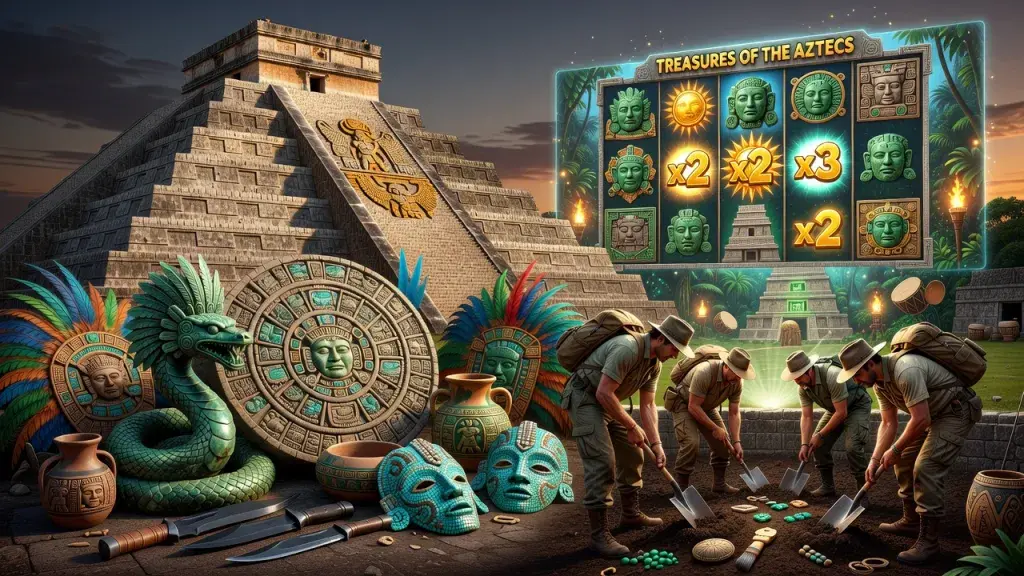
The game typically follows standard video slot conventions: a five-reel layout, multiple paylines, and symbols drawn directly from Aztec iconography - sun stones, jade masks, temple carvings, and stylized eagle warriors. Bonus rounds often revolve around a "treasure chamber" concept, rewarding players with free spins or multiplier boosts when specific symbol combinations land.
Visual and Audio Presentation
Production quality varies by developer, but the better versions invest in detailed background art depicting stepped pyramids and jungle temples, paired with percussion-heavy soundtracks meant to evoke ceremonial drumming. Weaker entries in this genre reuse generic gold-and-green color palettes without much attention to authentic visual detail.
Volatility, Payouts, and Player Experience
Most Aztec-themed slots, including this one, lean toward medium-to-high volatility, meaning wins arrive less frequently but carry larger payouts when they do. This design choice fits the "big treasure or nothing" fantasy the theme is built around. Players who prefer steady, frequent small wins may find the pacing frustrating, while those chasing bigger jackpots tend to rate the experience favorably.
How It Compares to Other Aztec-Themed Games
The market for pre-Columbian-themed slots is crowded, and comparisons are inevitable. Some readers specifically look for a treasures of aztec review to understand how this particular title stacks up against competitors in terms of RTP transparency and bonus frequency, since these details often separate a genuinely rewarding game from one that simply looks appealing.
Aztec Treasure Hunt Review: Physical and Digital Experiences
Beyond artifacts and slot games, "Aztec treasure hunt" also refers to a growing category of interactive experiences - escape rooms, city-based scavenger hunts, and mobile apps that gamify exploration using Aztec puzzles and riddles.
Escape Room and Live Event Formats
Many escape room companies now offer Aztec-themed rooms where participants decode glyphs, solve astronomical puzzles, or navigate a mock temple layout under time pressure. Quality varies significantly by venue, with the strongest examples incorporating genuine historical details about the calendar system or ritual practices rather than generic "ancient civilization" tropes.
Digital and App-Based Treasure Hunts
Mobile applications have adapted the treasure hunt format for solo play, combining GPS-based clues with historical trivia. These apps often blend education with entertainment, walking users through simplified explanations of Aztec history between puzzle stages.
What Makes a Treasure Hunt Experience Worth Trying
The best Aztec treasure hunt review feedback tends to praise experiences that balance challenge with accuracy - puzzles difficult enough to be satisfying, but grounded in real cultural references rather than invented mysticism. Poorly designed hunts rely on jump scares or arbitrary difficulty spikes instead of genuine puzzle logic.
Tips for Choosing a Quality Hunt Experience
- Check reviews for mentions of historical accuracy, not just "fun factor"
- Look for hunts designed with input from historians or cultural consultants
- Avoid experiences that reduce Aztec culture to violence and curses alone
- Prioritize venues or apps with transparent difficulty ratings
Comparing the Three: Artifacts, Game, and Hunt Side by Side
Each of these three categories serves a different purpose, and readers often arrive looking for one while discovering the others along the way.
Educational Value vs. Entertainment Value
Artifacts and museum collections offer the highest educational value but require deliberate effort - travel, reading, research - to appreciate fully. The slot game and treasure hunt experiences prioritize entertainment, using historical elements as flavor rather than substance. Neither approach is wrong, but expectations should match the format.
Cost and Accessibility Considerations
Viewing genuine artifacts often means travel to specific museums, sometimes with entrance fees but generally accessible to the public. Slot games require no travel but carry financial risk tied to gambling. Treasure hunts fall in the middle, typically priced per session with costs varying by city and venue quality.
Which Option Fits Different Types of Readers
History-focused readers get the most value from artifact collections and museum visits. Casual entertainment seekers gravitate toward the game, provided they understand its mechanics beforehand. Readers wanting an active, social experience tend to prefer treasure hunts, especially in group settings.
Frequently Asked Questions
Is the "Treasures of the Aztecs" game based on real historical events?
No, the game uses Aztec visual themes and symbolism for entertainment purposes but does not represent documented historical events. It borrows iconography like sun stones and temple imagery without claiming factual accuracy.
Where can I see authentic Aztec artifacts in person?
The National Museum of Anthropology in Mexico City holds the largest verified collection, alongside the Templo Mayor Museum built on the original excavation site. Smaller but significant collections exist at the British Museum and the Museum of the Americas in Madrid.
Are online sellers offering "real Aztec gold" trustworthy?
Generally no. Legitimate Aztec artifacts are held by museums and research institutions with documented provenance, and private sellers claiming to offer authentic pieces should be approached with strong skepticism.
What should I look for before trying an Aztec treasure hunt experience?
Check whether the experience incorporates real historical or cultural details rather than relying purely on generic mystery tropes. Reviews mentioning puzzle logic, historical consultants, or balanced difficulty tend to indicate a higher-quality hunt.
Is the Aztec-themed slot game suitable for beginners?
The mechanics follow standard slot conventions, so anyone familiar with video slots will adapt quickly. New players should understand the game's medium-to-high volatility before wagering, since payouts arrive less frequently but can be larger.
Why do so many products use Aztec imagery specifically, rather than other ancient cultures?
Aztec history combines dramatic visual elements - pyramids, gold, sacrificial ritual, sun worship - with a narrative of colonial conquest that Western audiences already recognize from school curricula. This familiarity makes the imagery easy to market without requiring extensive audience education.