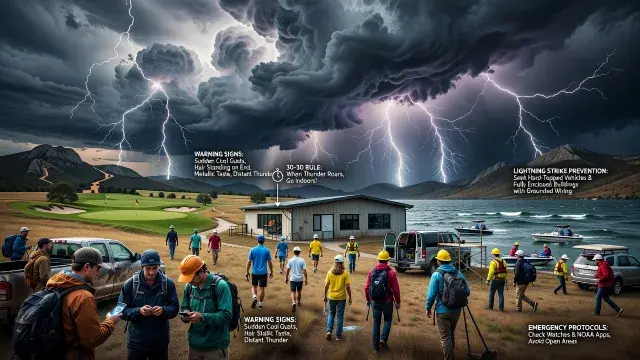
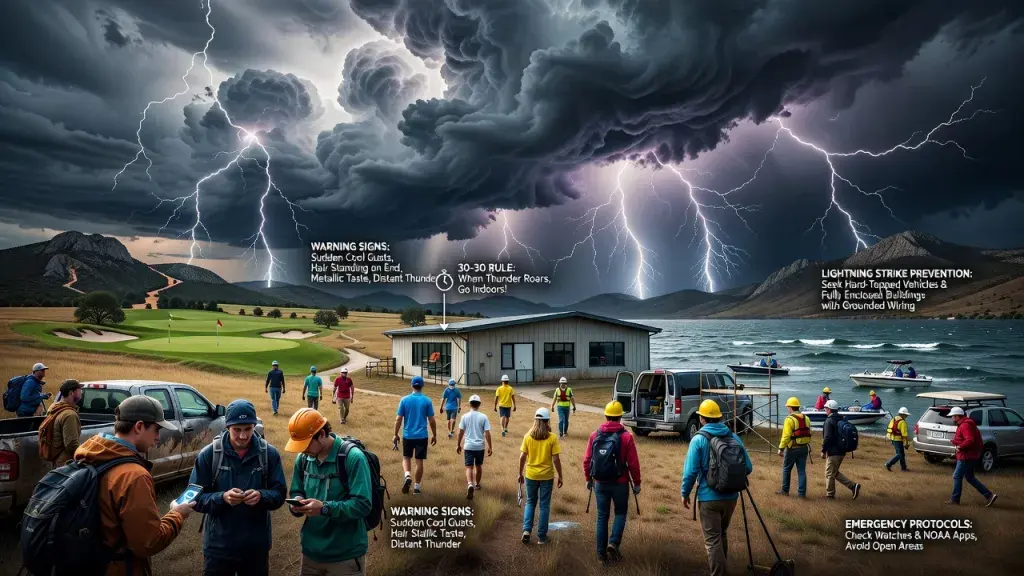
A single lightning bolt can carry up to a billion volts of electricity and heat the surrounding air to roughly five times the surface temperature of the sun. Yet most people caught outdoors during a storm underestimate the threat until the sky is already flashing overhead. Lightning kills and injures people every year in open fields, on golf courses, near water, and on mountain trails - often because they waited too long to seek cover or misjudged how far a storm actually was.
Understanding thunderstorm warning signs is not a matter of folklore or guesswork. Meteorologists and safety agencies have spent decades refining lightning storm safety rules based on how storms behave, how far lightning can travel from a visible storm cell, and what kind of shelter actually reduces risk. If you spend time hiking, camping, fishing, working construction, or coaching youth sports, the difference between knowing these rules and ignoring them can be the difference between a scare and a tragedy. For readers who enjoy storm-themed entertainment as well, the lightning storm rules used in outdoor safety training even echo the logic behind timing and pattern recognition found in games.
This piece breaks down how storms form, how to read the sky and your instruments, what lightning strike prevention actually looks like in practice, and what to do if you're caught in the open with no shelter in sight. It also covers what happens after a strike - because knowing emergency lightning protocol can save a life even after the storm has passed.
How Lightning Storms Develop and Why They're Dangerous
The Physics Behind a Lightning Bolt
Lightning forms inside cumulonimbus clouds when rising and falling air currents separate electrical charges - positive charges accumulate near the top of the cloud, negative charges near the base. When the difference becomes large enough, the atmosphere breaks down and a channel of ionized air forms, allowing a massive electrical discharge to travel between cloud and ground, or between two points within the cloud itself. The visible flash and the sound of thunder are two effects of the same event; thunder is simply the shockwave created by the rapid expansion of superheated air along the lightning channel.
Why Lightning Strikes Farther Than People Expect
One of the most persistent misconceptions is that lightning only strikes directly beneath a storm cloud. In reality, lightning can travel horizontally through clear air and strike ground ten miles or more from the parent storm - sometimes referred to as a "bolt from the blue" because it appears to come from clear sky. This is exactly why thunderstorm warning signs need to be taken seriously well before rain starts falling or thunder becomes loud.
Seasonal and Geographic Risk Factors
Lightning activity peaks in warm months when atmospheric instability is highest, and certain regions - particularly areas with frequent afternoon convective storms - see far more strikes than others. Elevated terrain, open plains, and coastal areas prone to rapid storm buildup all carry higher baseline risk. Anyone regularly active outdoors in these zones should treat lightning storm safety rules as a standing part of trip planning, not an afterthought.
Recognizing Thunderstorm Warning Signs Before the Storm Hits
Visual and Atmospheric Cues
Towering cumulus clouds with dark, flattened tops (anvil-shaped) signal a mature or maturing thunderstorm. A sudden drop in temperature, a noticeable shift in wind direction, and darkening skies to the west (in most mid-latitude regions, storms generally move west to east) are all reliable indicators that conditions are deteriorating fast.
The 30-30 Rule
A widely taught guideline states that if the time between seeing lightning and hearing thunder is 30 seconds or less, the storm is within six miles - close enough to pose a direct threat. Under this rule, you should already be seeking shelter, and you should wait at least 30 minutes after the last thunderclap before resuming outdoor activity. This single rule accounts for a large share of practical lightning strike prevention advice given by outdoor safety instructors.
Using Technology to Track Storms
Weather radar apps, NOAA weather radio, and real-time lightning tracking services give far more advance warning than the human eye alone. Checking forecasts before heading outdoors and monitoring radar during extended activities like hikes or fieldwork removes much of the guesswork from timing your retreat to safety.
- Darkening, anvil-shaped clouds approaching from the horizon
- A sudden cool gust of wind after a period of still, humid air
- Distant rumbling thunder even without visible rain
- Hair standing on end or a metallic taste - signs of imminent strike, requiring immediate action
Lightning Storm Safety Rules for Different Environments
Open Fields, Sports Fields, and Golf Courses
Open, flat terrain offers no natural cover, which makes you relatively taller than your surroundings and a more likely strike point. Youth sports leagues and golf courses in high-risk regions often follow formal suspension policies tied directly to the 30-30 rule, stopping play the moment thunder is heard.
Water Activities
Water conducts electricity efficiently, and boats, docks, and swimmers are highly exposed. Anyone on a lake, river, or ocean should head to shore and find solid shelter at the first sign of a developing storm rather than waiting for rain to start.
Mountains, Trails, and Exposed Terrain
Ridgelines and peaks are classic high-risk zones because they're often the tallest object for miles. Hikers should check forecasts obsessively before summit attempts and plan to be off exposed terrain by early afternoon, when convective storms are statistically most likely to build.
Construction Sites and Outdoor Workplaces
Employers with outdoor crews are expected to maintain a written emergency lightning protocol, including designated shelter locations and a chain of responsibility for calling a work stoppage. Metal scaffolding, cranes, and open equipment yards all raise the stakes considerably.
Lightning Strike Prevention: Practical Steps You Can Take Now
Planning Ahead of Outdoor Activities
Check detailed forecasts, not just a general "chance of storms" icon. Look at hourly precipitation probability and any severe weather outlooks issued for your area, and build a buffer into your schedule so you're never far from shelter when storm risk peaks.
What to Avoid During a Storm
Certain behaviors dramatically increase risk and should be avoided the moment thunder is audible:
- Standing under isolated tall trees, which are frequent strike targets
- Holding metal objects like golf clubs, fishing rods, or umbrellas with metal shafts
- Using corded electronics or plumbing connected to exterior lines during an indoor storm
- Remaining in open water or on elevated, exposed ground
Group Safety Considerations
When traveling in groups, spread out by at least fifteen feet if caught in the open. This reduces the chance that a single ground strike injures multiple people simultaneously and makes it more likely that uninjured members can render aid immediately.
Outdoor Lightning Shelter Guidelines When No Building Is Nearby
The Hierarchy of Shelter Options
A fully enclosed building with wiring and plumbing is the gold standard because it provides a path for electrical current to travel safely to ground. A hard-topped vehicle with the windows rolled up is the next best option - the metal frame, not the rubber tires, is what offers protection by channeling current around the occupants.
If No Shelter Is Available
When caught in genuinely open terrain with no building or vehicle within reach, minimize your risk profile: move away from the highest points, avoid isolated trees, and get off ridgelines immediately. Crouching low with feet together and minimizing contact with the ground reduces - but does not eliminate - risk, and should only be treated as a last resort rather than a primary strategy.
Common Shelter Mistakes
Small picnic shelters, open-sided pavilions, tents, and sheds do not protect against lightning because they lack a grounding path. Many injuries occur precisely because people believe a roof alone equals safety. Following proper outdoor lightning shelter guidelines means recognizing that only fully enclosed, wired structures or hard-topped vehicles genuinely reduce risk.
Emergency Lightning Protocol: What to Do During and After a Strike
Immediate Actions During an Active Storm
If you feel your hair stand on end or hear a crackling sound, a strike may be imminent. Crouch immediately, minimize contact with the ground, and move away from metal objects and water sources as quickly as safety allows.
Responding to a Lightning Strike Victim
Contrary to old myths, lightning strike victims do not retain an electrical charge and are safe to touch immediately. Call for emergency medical help right away, check for breathing and pulse, and begin CPR if the person is unresponsive and not breathing normally. Cardiac arrest is the leading cause of death from lightning strikes, and rapid response significantly improves survival odds.
Post-Storm Precautions
Wait a full 30 minutes after the last audible thunder before resuming outdoor activity, since trailing storm cells can still produce dangerous strikes even after the heaviest rain has passed. Check on companions, reassess the sky, and confirm that no secondary storm cell is approaching before returning to open terrain.
Frequently Asked Questions
Can lightning strike the same place twice?
Yes, and tall or isolated structures are struck repeatedly over time precisely because their height and exposure make them consistent targets. This is why tall buildings often have dedicated lightning rods designed to safely channel repeated strikes to the ground.
Is it safe to shelter under a rock overhang or in a shallow cave during a storm?
No - partial shelters like overhangs and shallow caves can actually increase risk because current can jump across the gap between the ceiling and the ground, a phenomenon known as a ground-to-object arc. Full enclosure in a building or hard-topped vehicle remains the only reliable option.
How far away does thunder need to be before it's safe to go back outside?
Wait until at least 30 minutes have passed since you last heard thunder or saw lightning, regardless of whether rain has stopped. Storm cells often trail behind the main system and can produce strikes well after the visible weather appears to calm.
Does rubber footwear or tires protect against lightning?
No, the thickness of rubber in shoes or tires is nowhere near sufficient to insulate against a lightning strike's voltage. A vehicle protects occupants because its metal shell redirects current around the interior, not because of its rubber tires.
What should coaches or event organizers do if a storm approaches during an outdoor event?
Establish a clear emergency lightning protocol in advance, including a designated safety official authorized to stop the activity the moment the 30-30 rule is triggered. Identify enclosed shelter locations before the event begins, and communicate the plan to all participants so there's no confusion during an actual weather threat.
Are metal fences or bleachers more dangerous during a storm?
Yes, metal structures can conduct current over long distances, so standing near or leaning on metal bleachers, fences, or railings during a storm increases risk even without a direct strike. Moving away from all metal fixtures is a standard part of outdoor lightning shelter guidelines.