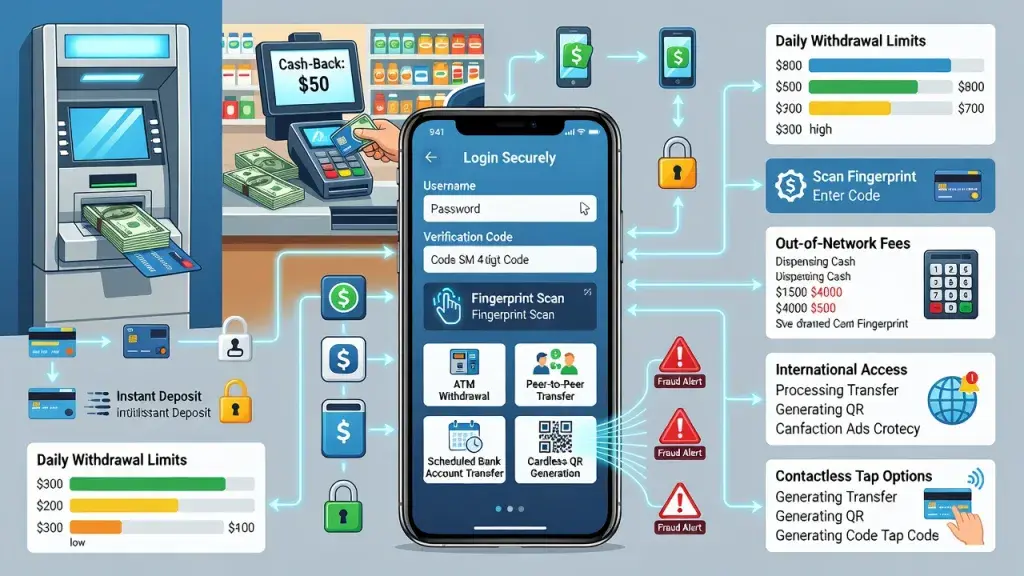
Cash hasn't disappeared - it's just gotten harder to reach without a screen standing between you and your money. Every online cash withdrawal now starts the same way: a login, a verification code, maybe a fingerprint scan, and only then a route to physical currency. That layered process didn't exist twenty years ago, when a passbook and a teller window were the only interface you needed.
What's changed is the number of paths available once you clear that digital gate. You can still walk to an ATM, but you can also route funds through a peer-to-peer app, request a same-day transfer to a partner retail location, or set up a scheduled withdrawal that lands in your checking account before you even wake up. Some readers land here after a specific transaction went sideways - a card declined, a transfer stuck in pending, a fee that seemed to appear from nowhere - and if that's your situation, a dedicated resource on how to withdraw money online can walk through troubleshooting steps in more detail.
This piece breaks down the mechanics behind each method, the fees attached to them, and the security habits that keep your account from becoming someone else's payday. By the end, you'll know exactly which option fits your situation - whether that's a bank transfer, a debit card at an ATM, or a mobile app built for speed.
Understanding Online Cash Withdrawal Basics
Before comparing specific methods, it helps to separate two things people often conflate: moving money electronically, and actually holding cash in your hand. An online cash withdrawal is really a two-stage event. The digital stage authorizes the transaction and moves value from one ledger entry to another. The physical stage - the ATM, the teller, the retail cash-back counter - is where that value becomes paper and coin.
What Counts as an Online Withdrawal
Strictly speaking, no cash travels through the internet. What travels is an instruction: release funds, verify identity, dispense currency. When you withdraw money from bank account online through your banking app, you're authorizing a future physical event, not receiving cash on the spot. The exception is when digital withdrawal connects to a mobile wallet balance that can be spent immediately without ever touching a physical machine.
Why the Process Requires Multiple Verification Steps
Banks layer authentication because cash, unlike a card swipe, can't be reversed once it leaves the machine. A fraudulent online purchase can often be disputed and refunded. A withdrawn $400 in twenties cannot. That asymmetry explains why banks apply stricter identity checks, transaction limits, and sometimes hold periods to withdrawal requests compared to routine purchases.
The Role of Daily and Per-Transaction Limits
Every bank sets a ceiling on how much you can pull out within a rolling 24-hour period, usually somewhere between $300 and $1,000 for standard accounts, with premium tiers allowing more. These limits exist to contain damage if your credentials are compromised, not to inconvenience you - though they frequently do exactly that when you need a large sum unexpectedly.
- Standard daily ATM limits typically range from $300 to $800
- Premium or private banking tiers may raise limits to $2,000 or more
- Some banks allow temporary limit increases through the app for pre-planned large withdrawals
How to Withdraw Money from Bank Account Online
The most direct route to physical cash still runs through your primary bank account, but the digital layer now offers several ways to initiate that process before you ever reach a machine or a teller.
Transferring to a Linked Account Before Withdrawal
If your cash sits in a savings account or a secondary bank, the first step is often an internal or external transfer to the checking account tied to your debit card. This step matters because most ATMs and retail cash-back systems only pull from checking, not savings. Initiating that transfer online, then withdrawing later that day, is the most common two-step pattern for everyday users.
Scheduling a Withdrawal Request in Advance
Some banks let you schedule a withdrawal appointment through their portal, reserving a specific cash amount for pickup at a branch. This matters for large sums - anything above your daily ATM ceiling - since branches often need advance notice to have that much physical currency on hand.
Using Online Banking to Verify Funds Before a Trip to the Branch
Checking your available balance online before heading out avoids the common frustration of a declined withdrawal due to a pending hold or an unexpected fee that dropped your balance below what you assumed. This single habit prevents a large share of failed withdrawal attempts.
Cash Withdrawal Options Online: Comparing the Methods
Once you understand the basic mechanics, the real decision is choosing among the available cash withdrawal options online, each with different speed, cost, and convenience trade-offs.
Bank Transfer to a Third-Party Cash Pickup Service
Certain services allow you to send money digitally and generate a code redeemable for cash at a partner retail location, without needing a debit card at all. This method suits people without easy ATM access or those sending funds to someone else for pickup.
Mobile Wallet to Bank Transfer, Then Withdrawal
Digital wallets holding a balance - from payment apps or prepaid card platforms - usually require a transfer to a linked bank account before that money becomes withdrawable as cash. This extra step introduces a delay, often one to three business days, that catches users off guard when they assume wallet funds are instantly accessible in physical form.
Retail Cash-Back at Point of Sale
Many grocery and pharmacy chains let you request cash back when paying with a debit card, initiated at checkout rather than a bank app. It's not purely "online," but it's increasingly tied to digital receipts and app-based purchase confirmations, blurring the line between digital and in-person withdrawal.
Peer-to-Peer Apps with Instant Deposit Features
Some peer-to-peer payment platforms offer an "instant deposit" option for a small fee, pushing funds to your debit card balance within minutes instead of the standard one-to-three-day transfer window. That speed matters when you need cash the same day and can't wait for a standard bank transfer to clear.
Withdraw Cash Using Digital Banking: Step-by-Step Process
Digital banking apps have become the control center for most withdrawal activity, even when the final cash exchange still happens at a physical location.
Setting Up Withdrawal Permissions in Your Banking App
Most apps require you to enable ATM or cash-back features explicitly, sometimes through a security settings menu rather than the main dashboard. If your card was recently issued or reissued, this setting may default to off, blocking withdrawals until you turn it on manually.
Generating a Cardless Withdrawal Code
A growing number of banks let you withdraw cash using digital banking tools that generate a one-time code or QR code directly in the app, which you then scan or enter at a compatible ATM - no physical card required. This feature is particularly useful if your card is lost but your phone and app access remain intact.
Confirming Transaction Alerts and Fraud Flags
After initiating any withdrawal through the app, most systems send a real-time alert. Reviewing that alert immediately, rather than dismissing it, is the fastest way to catch unauthorized activity before a second withdrawal drains the account further.
ATM Withdrawal with Debit Card Online: Setup and Best Practices
Despite newer alternatives, the ATM remains the most reliable method for immediate cash, and pairing it with proper online setup reduces friction and risk.
Locating In-Network ATMs Through the Banking App
Nearly every major bank's app includes an ATM locator showing which machines are fee-free for your account. Using this before leaving home avoids the flat fee - often $2.50 to $3.50 - charged by out-of-network machines, on top of a possible surcharge from the machine's operator.
Enabling International Withdrawal Access
If you're traveling, an ATM withdrawal with debit card online setup usually requires you to notify the bank in advance through the app, or your card may be blocked automatically as a fraud precaution. This step is easy to overlook and one of the most common reasons travelers find their card declined abroad despite having sufficient funds.
Understanding Chip, PIN, and Contactless ATM Options
Newer ATMs support contactless withdrawal via phone tap, in addition to chip-and-PIN. Contactless withdrawal at the machine, paired with the app's cardless code feature, means some users can withdraw cash without ever inserting a physical card.
Security and Fees: What Every Online Withdrawal Involves
No withdrawal method is free of cost or risk entirely, and understanding both before you commit to a method saves money and stress later.
Common Fee Structures Across Withdrawal Methods
Out-of-network ATM fees, instant transfer fees on peer-to-peer apps, and international withdrawal surcharges are the three most frequent costs. Reading your bank's fee schedule, usually posted in the app under account terms, clarifies which method actually costs the least for your specific situation.
Protecting Your PIN and App Credentials
Never store your PIN in your phone's notes app or reuse it as your banking app password. These two habits, more than any technical vulnerability, account for most cases of unauthorized cash withdrawal reported by account holders.
Recognizing ATM Skimming and Phishing Risks
Physical skimming devices attached to card slots and phishing emails mimicking your bank's app login page remain the two dominant threats to withdrawal security. Covering the keypad while entering your PIN and verifying URLs before logging into any banking portal are simple, effective countermeasures.
Frequently Asked Questions
Can I withdraw cash from my bank account without a debit card?
Yes. Most major banks now offer cardless withdrawal through their mobile app, generating a one-time code or QR code you scan at a compatible ATM. This works even if your card is lost, damaged, or expired, as long as your account and app access remain active.
Why was my online cash withdrawal declined even though I have enough money?
The most common causes are a daily withdrawal limit already reached, a fraud flag triggered by unusual location or amount, or a pending hold reducing your available balance below what your total balance shows. Checking your app's transaction alerts usually reveals the exact reason within minutes.
Is it safe to use a debit card at an out-of-network ATM?
It's generally safe from a security standpoint, though it typically costs more due to combined fees from your bank and the ATM operator. The bigger risk is skimming devices, which appear more often on independently operated machines than bank-owned ones, so inspecting the card slot before inserting your card is a reasonable precaution.
How long does it take to withdraw cash after a peer-to-peer transfer?
Standard transfers usually take one to three business days to reach your bank account before becoming withdrawable as cash. Instant deposit options, offered by many apps for a small percentage fee, can make funds available on your debit card within minutes instead.
What's the difference between a withdrawal limit and a transfer limit?
A withdrawal limit caps how much physical cash you can take out via ATM or teller in a set period, usually 24 hours. A transfer limit caps how much you can move electronically between accounts, and the two limits are tracked separately even though both draw from the same underlying balance.
Do I need to notify my bank before withdrawing cash while traveling abroad?
Yes, in most cases. Banks often block international ATM activity automatically as a fraud prevention measure unless you've flagged your travel dates in advance through the app or by phone. Skipping this step is one of the most frequent reasons travelers get declined despite having sufficient funds.