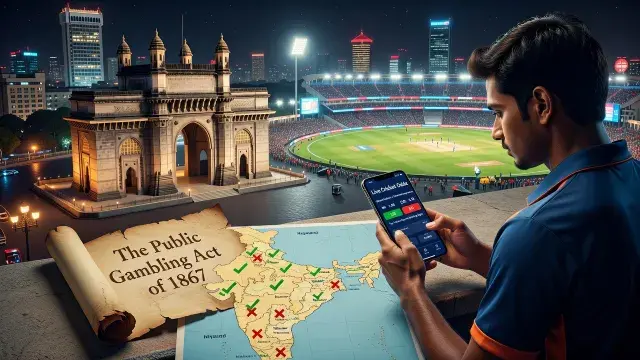
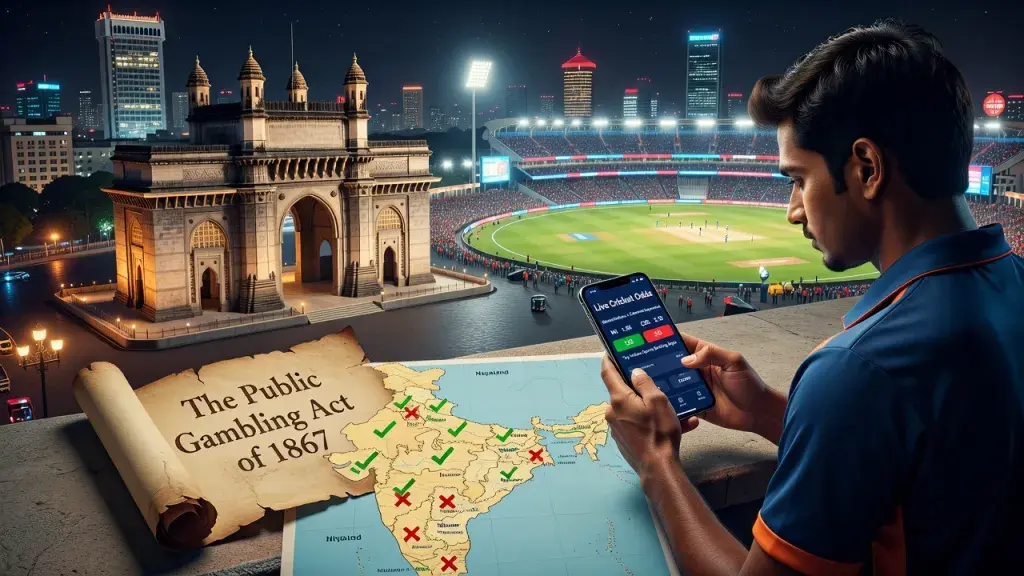
No single national law in India mentions the word "internet." That gap, created by a colonial-era statute drafted in 1867, has shaped how millions of Indians place bets on cricket matches today. The Public Gambling Act was written for physical gambling houses, long before anyone imagined a smartphone app tracking live odds during an IPL match. This legal blind spot has produced one of the most unusual betting markets in the world: enormous in scale, ambiguous in status, and constantly shifting as individual states carve out their own rules.
For anyone trying to understand sports betting in India, the confusion is understandable. Federal silence on online wagering has pushed the responsibility for regulation onto individual states, resulting in a patchwork where an activity might be tolerated in one region and explicitly banned in another. Readers looking for clarity on where they stand legally, or those simply searching for reliable information such as guidance on how to sport bet in india, deserve a straight answer rather than vague reassurances. This piece breaks down the legal reality, the regulatory patchwork, how cricket odds actually work, and what separates a trustworthy betting app from a risky one.
Understanding this landscape matters because the stakes are not just financial. Choosing the wrong platform, misreading a state law, or misunderstanding how odds are calculated can cost users real money and expose them to unnecessary legal risk.
Understanding the Legal Landscape of Sports Betting in India
The Public Gambling Act of 1867 and Its Modern Limitations
India's foundational gambling law predates electricity in most of the country, let alone the internet. The Public Gambling Act criminalizes running or visiting a "common gaming house," a physical space defined in terms that simply do not account for digital platforms. Courts and lawmakers have spent decades debating whether this colonial statute can be stretched to cover online sports betting legality in India, and the honest answer is that it mostly cannot, at least not directly. This has left a vacuum that neither fully permits nor fully bans the activity at the national level.
Why Cricket and Skill-Based Games Occupy a Gray Zone
Indian courts have repeatedly distinguished between games of "skill" and games of "chance," a distinction rooted in earlier rulings involving rummy and horse racing. Fantasy cricket platforms have used this precedent to argue that predicting player performance requires skill rather than luck, which has allowed them to operate with relative legal comfort. Traditional sports betting, where a user simply picks a winning team or a specific outcome, does not enjoy the same protection, which is why so much of the market operates through offshore operators rather than domestic companies.
State-Level Variations: Where Betting Is Restricted or Tolerated
Gambling and betting fall under the State List in India's constitution, meaning each state writes its own rules. Sikkim and Nagaland have introduced licensing frameworks that permit certain forms of online gaming and betting under strict conditions. Goa allows some regulated casino gambling within its borders. Meanwhile, states like Telangana and Andhra Pradesh have passed some of the strictest anti-betting laws in the country, criminalizing both operators and, in certain readings, individual bettors. This inconsistency means a resident's legal exposure can change simply by crossing a state border.
- Sikkim: licensed online gaming and sports betting permitted under state regulation
- Nagaland: skill-based gaming certificates issued to operators meeting specific criteria
- Telangana and Andhra Pradesh: comprehensive bans covering both online and offline betting
- Most other states: no explicit online betting law, leaving the activity in a legal gray area
Online Wagering Regulations in India: What Bettors Need to Know
Central Government Policies and the IT Rules Amendment
The Ministry of Electronics and Information Technology has taken an increasingly active role in regulating online gaming and wagering platforms through amendments to the Information Technology Rules. These changes introduced the concept of self-regulatory bodies for online gaming, tasked with certifying which games qualify as permissible under Indian law. While the framework primarily targets domestic real-money gaming apps, it signals a broader government intent to formalize online wagering regulations in India rather than leave the sector entirely unaddressed.
Taxation Rules for Winnings from Betting Platforms
Regardless of the ambiguity surrounding legality, the Income Tax Act is unambiguous about one thing: winnings from betting and gambling are taxable. Under Section 194B, a flat tax rate applies to winnings above a specified threshold, deducted at source by platforms that comply with Indian tax law. This creates an odd situation where the government taxes an activity that remains legally undefined in most states, a contradiction that bettors need to understand before assuming that using an offshore platform removes their tax obligations.
How Offshore Betting Platforms Operate Within Indian Jurisdiction
Most of the platforms Indian bettors actually use are licensed outside the country, typically in jurisdictions like Curaçao or Malta. Because these companies are not incorporated in India, domestic gambling laws technically do not apply to their operations. This is the loophole that has allowed a massive betting industry to flourish despite the absence of clear domestic legislation. Indian users accessing these sites are not necessarily breaking a specific law, since most state gambling acts criminalize operating a betting business rather than placing a bet as an individual customer.
How Cricket Betting Odds Work in the Indian Market
Decimal, Fractional, and Moneyline Formats Explained
Cricket betting odds India-wide are typically presented in decimal format, a departure from the fractional odds still common in British racing markets. A decimal odd of 2.50 means a successful ₹1,000 bet returns ₹2,500, inclusive of the original stake. Fractional odds, expressed as something like 3/2, communicate the same information differently: for every two units staked, three units of profit are returned. Moneyline odds, more common on American platforms, rarely appear on Indian-facing sites but are worth understanding if a bettor uses an international app.
Factors That Influence Live Odds During IPL and International Matches
Odds are not static predictions; they shift constantly based on the flow of money and real-time match events. A sudden collapse of wickets, a change in pitch conditions, or an injury to a key player can swing odds dramatically within minutes. Bookmakers also adjust odds based on betting volume, shortening prices on heavily backed outcomes to balance their liability. During high-profile IPL fixtures, odds can move several times per over, which is why serious bettors track live odds rather than relying on pre-match numbers alone.
Comparing Odds Across Platforms for Better Value
Odds for the same match can vary noticeably between platforms, sometimes by a margin significant enough to affect long-term profitability. This happens because each operator calculates its own risk models and adjusts margins independently. Comparing odds before placing a wager, rather than defaulting to a single familiar app, is one of the simplest ways bettors improve their expected returns over time.
Choosing the Right Indian Sports Betting Apps
Licensing and Security Standards to Look For
A legitimate platform will display its operating license clearly, usually issued by an offshore gaming authority given the absence of a domestic licensing body for betting. Encryption standards for payment processing, clear terms of service, and transparent withdrawal policies are non-negotiable indicators of a platform worth trusting. Indian sports betting apps that hide licensing details or bury withdrawal terms in vague language should be treated as a warning sign rather than an oversight.
Payment Methods Popular Among Indian Users
UPI has become the dominant payment rail for Indian betting apps, prized for its speed and near-universal adoption. E-wallets and cryptocurrency options have also grown in popularity, partly because they offer an additional layer of separation between a user's primary bank account and their betting activity. Net banking remains available but is increasingly seen as slower compared to UPI-based transfers.
App Features That Improve the Cricket Betting Experience
The strongest apps distinguish themselves through features that go beyond basic bet placement. Live streaming integrated directly into the betting interface allows users to watch a match while adjusting positions in real time. Cash-out options let bettors lock in profit or cut losses before a match concludes, rather than waiting passively for a final result.
- Live streaming of domestic and international matches within the app
- Cash-out functionality for in-progress bets
- Detailed statistics dashboards covering player and team performance history
- Fast UPI withdrawals with minimal processing delays
Risks, Responsible Betting, and Consumer Protection
Recognizing Fraudulent or Unlicensed Platforms
The unregulated nature of India's betting market has created fertile ground for scam operators posing as legitimate betting sites. Common red flags include unusually generous sign-up bonuses with no clear wagering requirements, an absence of visible licensing information, and customer support that becomes unreachable the moment a withdrawal request is submitted. Checking independent reviews and confirming an operator's licensing jurisdiction before depositing funds prevents most of these situations entirely.
Setting Betting Limits and Recognizing Problem Gambling Signs
Reputable platforms now offer built-in tools for deposit limits, loss limits, and self-exclusion periods, mirroring standards used in more heavily regulated gambling markets abroad. Warning signs of problem gambling include chasing losses with progressively larger bets, borrowing money specifically to fund betting activity, and prioritizing betting over financial obligations. Recognizing these patterns early, rather than dismissing them, is the difference between betting as entertainment and betting as a financial liability.
Legal Recourse if a Platform Withholds Winnings
Because most betting platforms operate offshore, Indian courts have limited direct authority to compel payment in disputes. Users typically have more success working through the platform's licensing authority, which can investigate complaints and, in serious cases, revoke an operator's license. Documenting all transactions and communications from the outset makes any dispute resolution process considerably more straightforward.
Frequently Asked Questions
Is it illegal for an individual to place a sports bet online in India?
Most state gambling laws target operators running betting businesses rather than individual bettors, so placing a personal bet rarely triggers direct prosecution in most states. Exceptions exist in states like Telangana, where legislation explicitly criminalizes the act of betting itself, not just operating a betting service.
Do I have to pay tax on cricket betting winnings even if the platform is based overseas?
Yes. Indian tax law requires residents to declare gambling winnings regardless of where the platform is licensed, and failing to report this income can result in penalties during a tax assessment. The offshore location of a betting site has no bearing on an individual's personal tax obligations under Indian law.
How can I verify that a betting app is licensed and safe to use?
Check the footer of the platform's website or app for licensing details, typically issued by authorities in Curaçao, Malta, or similar jurisdictions, and cross-reference that license number with the regulator's public database. Genuine platforms will also display transparent terms covering withdrawal timelines, fees, and dispute procedures.
Why do cricket betting odds change so quickly during a live match?
Odds respond to two forces simultaneously: shifting match conditions like wickets or weather, and the volume of money being staked on particular outcomes. Bookmakers recalibrate odds to manage their own risk exposure, which means a single dramatic event, such as a top batsman getting out, can move prices within seconds.
Which payment method is best for depositing and withdrawing on Indian betting apps?
UPI is generally the fastest and most convenient option for Indian users, offering near-instant deposits and quicker withdrawal processing than traditional net banking. Cryptocurrency is a reasonable alternative for users who prioritize additional privacy, though it requires a bit more technical familiarity.
What should I do if a betting platform refuses to pay out my winnings?
Start by gathering all transaction records, screenshots, and correspondence with customer support to build a clear paper trail. File a formal complaint with the platform's licensing authority, since these regulators have the power to investigate and penalize operators that fail to honor legitimate payouts.