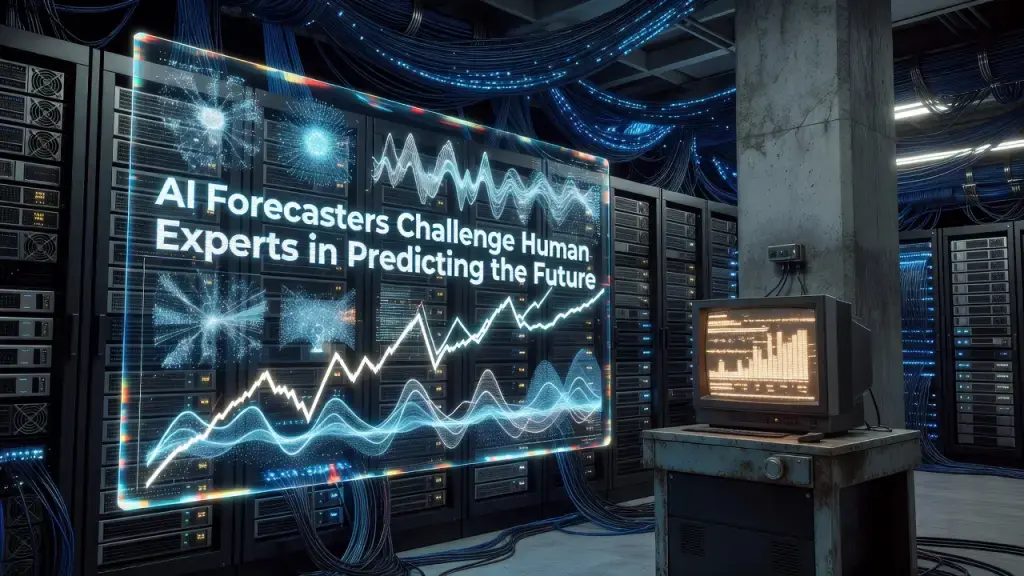
A handful of startups in New York and beyond are wagering that artificial intelligence can outpredict even the sharpest human analysts, whether the question concerns a stock's trajectory, the reopening of a contested shipping channel, or the chart performance of a pop single. The claim sounds audacious, but early results suggest it is not idle hype. In September, two AI models topped the Metaculus Cup, a competition that pits forecasting systems against elite human predictors, marking what organizers and participants describe as a genuine inflection point.
The companies behind these systems, including FutureSearch and Mantic, say their models draw on enormous volumes of public and private data to assign probabilities to future events rather than issue flat predictions. That distinction matters: a forecast expressed as a percentage, cross-referenced against related variables, gives decision-makers a sense of uncertainty that a simple yes-or-no answer cannot. As these tools migrate from research labs into financial markets, the infrastructure supporting them, including the networks and data pipelines that feed them, has drawn scrutiny from security-conscious firms wary of exposing proprietary trading strategies, some of which now rely on techniques like an obfuscated vpn to mask the origin and nature of sensitive data traffic from competitors and prying intermediaries.
From Superforecasters to Algorithms
For more than a decade, a small cadre of so-called superforecasters, individuals whose track records on predicting geopolitical and economic events far exceed random chance, has been prized by governments and institutions. Tom Liptay, a human superforecaster employed by FutureSearch, now works alongside the very systems that may eventually replace him. Dan Schwarz, the company's cofounder, does not mince words about the timeline, suggesting that by the end of the decade, today's decision-making methods will look primitive by comparison.
Money Moves Fast, and So Does the Risk
The financial incentives are already visible. Theo Summer, cofounder of Preseen, turned a modest $35 stake into nearly $2 million in seven months trading on the prediction platform Kalshi, according to the company. Hedge funds, Preseen cofounder Veniamin Veselovsky noted, tend to be the fastest adopters because they can act on profitable signals almost immediately. That speed advantage raises a pointed concern: retail investors without access to costly AI infrastructure may soon find themselves squeezed out of consumer prediction markets like Kalshi and Polymarket, platforms used by millions of ordinary Americans, as institutional players and automated systems come to dominate the order books.
Beyond Wall Street
The reach of these forecasting tools is extending well past trading floors. Mantic has supplied a major American corporation with scenario analysis on regulatory shifts and has consulted for the British government, while FutureSearch sees potential in guiding medical research funding decisions. Toby Shevlane, Mantic's cofounder, says the most sophisticated models no longer simply answer questions posed to them; they generate their own questions about the future and weigh the likely outcomes independently. That capability points toward applications in corporate risk management, insurance underwriting, and public policy planning. It also invites unease. Veselovsky, while optimistic about the technology's benefits, acknowledged a nagging worry that rival nations, including Russia and China, could develop comparable or superior systems, raising the stakes of an AI forecasting race whose consequences extend far beyond financial markets.